You wake up with a tense jaw, a sharp pain in your temple, or teeth that feel more sensitive than usual. Your partner may have mentioned that you grind your teeth at night. If this sounds familiar, chances are your dentist has already recommended (or will soon recommend) a night guard.
It’s one of the most common treatments in dental clinics, yet it still raises plenty of questions: what exactly is a night guard, what types are available, what does it do, and how much does it cost? Let’s take a closer look.
What Is a Night Guard and What Is It Used For?
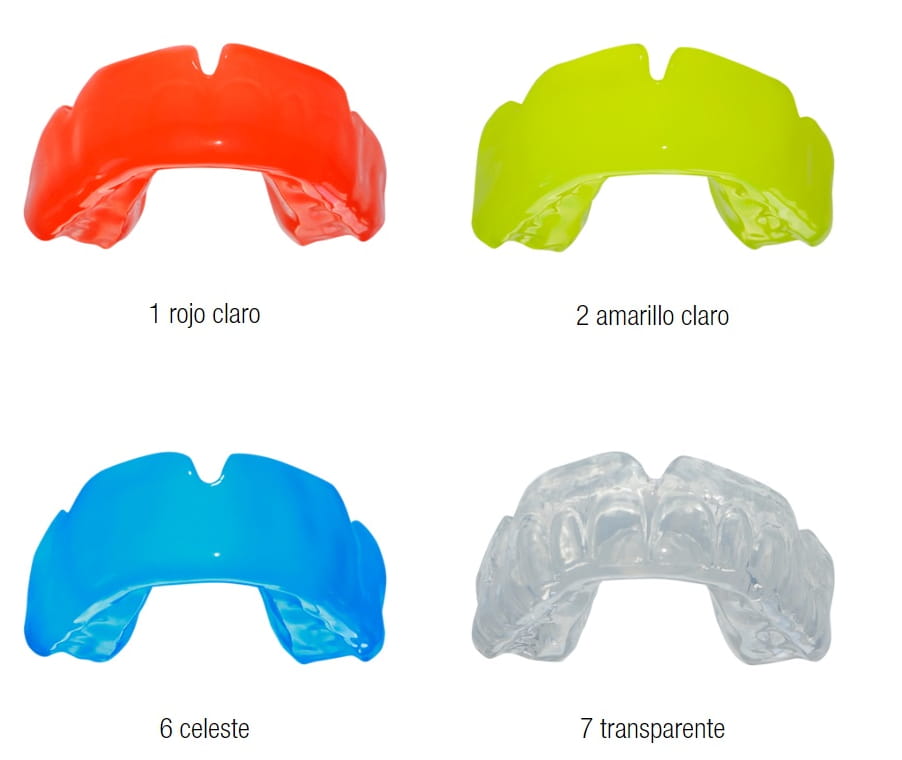
A night guard, also known as an occlusal splint, is a removable dental appliance typically made from acrylic resin or thermoplastic materials using 3D printing or milling technology. It fits over the teeth (usually the upper arch) and is worn at night or during periods of increased jaw tension.
Its main purpose is to interrupt the brain’s habitual response to teeth grinding, helping to protect both the teeth and the jaw muscles.
To understand why a night guard can help prevent nighttime teeth grinding, we need to go back approximately 50,000 years.
Around 50,000 years ago, the human skull was larger than it is today. Teeth were roughly the same size, but there was more space between them. When early humans went three, four, or more days without eating, their brains would supposedly make a decision during sleep: the next time food became available, their bite needed to function as efficiently as possible. While they slept, the brain would assess the position of the molars, canines, and incisors. If something seemed out of place, it would attempt to correct it by clenching and grinding the teeth.
Fast-forward 50,000 years, and according to this explanation, our brains still respond to anxiety and stress in much the same way. However, our skulls are smaller, our teeth remain approximately the same size, and there is far less space between them. During periods of stress or anxiety, the brain may unconsciously assess the way our teeth fit together and attempt to correct any perceived misalignment. With no room for the teeth to move, this can contribute to tooth wear and crowding.
A night guard is approximately 1.5 mm thick across the biting surfaces, where the dental anatomy is deliberately smoothed out. This creates a barrier that changes the way the upper and lower teeth come into contact. According to this theory, the brain detects the presence of the appliance and gradually stops attempting to assess the bite, a process that may take around three to four weeks.
At the same time, the thickness of the night guard helps keep the masseter muscles in a slightly stretched position, which may gradually reduce muscle tightness and tension.
In this way, the appliance helps protect tooth enamel from wear while reducing the strain placed on the jaw muscles and the temporomandibular joint (TMJ).
A custom night guard is made from a three-dimensional model of the patient’s mouth, usually obtained using an intraoral scanner. This allows it to fit the individual’s dental anatomy and bite precisely. That’s what sets it apart from over-the-counter mouthguards sold in pharmacies, which are generally intended for occasional use rather than the long-term management of diagnosed bruxism.
Types of Night Guards
Not all night guards are the same. Your dentist will recommend the most suitable type based on the severity of your bruxism, the condition of your temporomandibular joint (TMJ), and your individual needs.
Hard Night Guard (Michigan Splint)
This is the type most commonly used by dentists and generally offers the best results over the medium and long term. Made from hard acrylic resin, it distributes biting forces evenly and allows the dentist to make precise adjustments to the way the teeth come together.
It’s particularly suitable for severe bruxism, patients experiencing TMJ pain, or those who already have significant tooth wear.
Semi-Rigid Mouthguard and Sports Mouthguard (Playsafe Type)
This type combines a soft inner layer with a firmer outer layer, offering a balance between comfort and durability. Semi-rigid appliances may be recommended for moderate bruxism or for patients who find hard night guards uncomfortable.
Sports mouthguards are specifically designed to protect the teeth during physical activity, helping to absorb and distribute impact forces more effectively across both dental arches.
When Should You Wear a Night Guard?
Dentists typically recommend a night guard when nighttime or daytime bruxism has been identified through a clinical examination, visible wear on the biting surfaces of the teeth, or symptoms reported by the patient, such as jaw pain upon waking, clicking sounds in the temporomandibular joint, or frequent headaches.
A protective appliance may also be recommended for patients who have recently completed orthodontic treatment to help maintain their new tooth alignment, as well as for those with veneers, crowns, or recently placed implants, to protect their dental restorations against excessive biting forces and wear.
If bruxism has gone untreated for some time and has already caused a loss of tooth structure, wearing a night guard is often combined with restorative dental treatment.
Through restorative dentistry, damaged teeth can be rebuilt to restore their natural shape and function, preventing further deterioration and helping preserve long-term oral health.
How Much Does a Night Guard Cost?
In Spain, a custom-made night guard from a dental clinic typically costs between €250 and €350, although prices vary depending on the type of appliance, the materials used, whether it is produced from traditional dental impressions or digital scans, and the clinic providing the treatment.
Hard acrylic night guards tend to fall towards the upper end of this price range, while soft or semi-rigid alternatives are generally slightly more affordable.

Professional registration Nº 28004040
Degree in Medicine and Surgery, Autonomous University of Madrid
Degree in Dentistry, Complutense University of Madrid
Master’s Degree in Aesthetic Dentistry, Complutense University of Madrid
University Specialist in Pediatric Dentistry, San Rafael Hospital, Madrid
University Specialist in Individual and Public Oral Preventive Programs, Complutense University of Madrid
Director of Radiodiagnostic Facilities
Medical Director, Smiling Dental Center
Specialist in Aesthetic Dentistry, Dr. Bruce Crispin, Los Angeles, California
Member of the Spanish Society of Prosthodontics (SEPES)
CPR Course
Advanced English