Swollen Gums
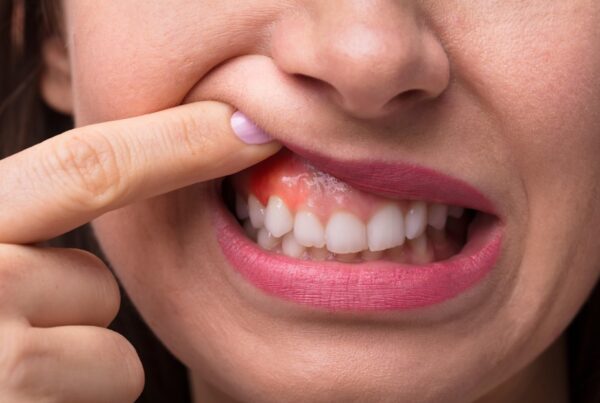
Red, swollen gums or gums that bleed when you brush your teeth aren’t just a temporary irritation. They’re your body’s way of telling you that something isn’t right. Gum inflammation is one of the most common reasons people visit a dental clinic, and in most cases, it can be treated successfully if caught early.
What Causes Swollen Gums?
Our mouths naturally contain different types of bacteria. Problems arise when certain bacteria multiply to the point where our bodies can no longer keep them under control. However, our immune system can still detect their presence.
When this happens, the body responds by sending immune cells to the affected area through the bloodstream. Gum tissue is highly elastic, so the increased blood flow causes it to swell and become more sensitive. Eventually, even the gentle pressure of brushing can cause slight bleeding. You might notice this when you rinse your mouth and see that the toothpaste foam has turned pink. It’s your body’s way of warning you that harmful bacteria are present.
The most common cause is the buildup of bacterial plaque along the gumline and between the teeth due to inadequate oral hygiene. When plaque isn’t removed through regular brushing and flossing, bacteria irritate the gum tissue and cause gingivitis, the mildest and most reversible form of gum disease. If left untreated, gingivitis can progress to periodontitis, a deeper infection that affects the bone supporting the teeth and cannot be resolved through oral hygiene alone.
However, plaque isn’t the only possible cause. Diabetes, high blood pressure, autoimmune conditions, and hormonal changes during pregnancy, puberty, or menopause can increase gum sensitivity and make people more susceptible to gum problems. Poorly controlled diabetes reduces the body’s ability to fight oral infections. Smoking, meanwhile, can mask the visible signs of inflammation by reducing bleeding while allowing damage to the underlying tissues to progress.
Brushing too aggressively, poorly fitted orthodontic appliances, or dentures that rub against the gums can also trigger inflammation. Certain medications that reduce saliva production or encourage gum tissue overgrowth may contribute to the problem as well.
Symptoms of Swollen Gums
To determine whether your gums are inflamed, look out for the following warning signs: a deep red or purplish colour instead of the usual pale pink; bleeding when brushing or flossing, even without applying much pressure; visible swelling along the gumline or between the teeth; discomfort when chewing or eating hot or cold foods; persistent bad breath that doesn’t improve after brushing; and gums that begin to pull away from the teeth, exposing more of the tooth surface than usual.
The combination of symptoms you experience largely depends on the underlying condition causing the inflammation.
Gingivitis is the most common and mildest form of gum disease. It causes red, swollen gums that bleed easily, but the teeth remain firmly in place and there is no significant loss of supporting tissue. Gingivitis is reversible: with professional dental cleaning and proper oral hygiene, the gums can return to a healthy condition within a few weeks.
When gingivitis is left untreated, it can develop into periodontitis. At this stage, symptoms become more severe. Periodontal pockets form between the teeth and gums, creating spaces where bacteria accumulate. Teeth may begin to feel slightly loose, and persistent bad breath can become increasingly difficult to manage. Unlike gingivitis, the bone loss caused by periodontitis cannot be reversed through routine cleaning alone. However, appropriate periodontal treatment can help stop the disease from progressing.
Another common cause of localised swelling is a gum abscess, which is a collection of pus in a specific area of the gum. It is usually caused by a bacterial infection or a foreign object, such as a small piece of food, becoming trapped beneath the gum tissue. A gum abscess typically causes a more pronounced and painful swelling than ordinary gum inflammation. Sometimes, pus may be released when pressure is applied to the affected area. This condition generally requires more urgent dental attention than widespread gingivitis.
People with partially erupted wisdom teeth may also develop pericoronitis. This occurs when the gum tissue surrounding a wisdom tooth becomes inflamed or infected because a flap of tissue traps food debris and bacteria. The pain is often particularly noticeable when biting down and may be accompanied by difficulty opening the mouth fully.
One or two isolated symptoms may simply be caused by brushing too hard or irritation from a specific area. However, if the symptoms persist or return day after day, the inflammation needs to be assessed by a dental professional. The pattern of symptoms can help identify which of these conditions is responsible.
Treatments for Swollen Gums
The first step in reducing gum inflammation is improving your oral hygiene routine. Use a soft-bristled toothbrush, position it at a 45-degree angle towards the gumline, and floss daily or use interdental brushes to remove plaque from the spaces between your teeth. An antibacterial mouthwash, such as one containing chlorhexidine, may also help for a short period, although it should not be used continuously without professional advice.
If the inflammation is accompanied by frequent bleeding or the formation of pockets between the teeth and gums, daily oral hygiene alone is no longer enough. At this stage, professional dental cleaning is necessary. Depending on the severity of the condition, this may involve routine cleaning (prophylaxis) or scaling and root planing to remove plaque and tartar from beneath the gumline, where an ordinary toothbrush cannot reach.
In cases of active infection, the dentist may recommend microbiological testing to identify the bacteria involved and determine whether specific antibiotics are necessary. If you are experiencing discomfort, an over-the-counter anti-inflammatory medication may provide temporary relief while the underlying cause is treated. However, medication cannot replace professional periodontal treatment when gum inflammation is persistent.
The treatment process at the dental clinic typically involves the following steps:
Initial assessment: This can be carried out by any qualified dentist to evaluate the condition of your gums and identify visible signs of inflammation.
Routine dental cleaning: A professional cleaning is performed to remove visible plaque and tartar from the teeth.
Periodontal assessment: This examination is carried out by a periodontist, a dentist specialising in gum health. The specialist performs an initial periodontal probing to measure the depth of the pockets between the teeth and gums.
Comprehensive periodontal charting: If the initial examination reveals pocket depths greater than 3 mm, a full periodontal chart is prepared. This involves measuring the pocket depth at six different points around each tooth and recording the results. Based on these measurements and the presence or absence of bleeding, the periodontist may recommend microbiological testing and establish a treatment plan to thoroughly clean the affected periodontal pockets.
Home Remedies for Swollen Gums: What Works and What’s a Myth?
It’s common to look for home remedies for swollen gums before booking a dental appointment. Some remedies, such as rinsing with warm salt water or cooled chamomile tea, may provide temporary relief thanks to their soothing and mild antiseptic properties. Others, however, are widely recommended despite having little scientific evidence behind them and may even make the problem worse.
One frequently searched remedy is hydrogen peroxide for swollen gums. When diluted with water, hydrogen peroxide is sometimes used as a mouth rinse because of its antiseptic properties. However, there is a significant risk of using it incorrectly. An unsuitable concentration or frequent use can irritate or even burn the delicate soft tissues inside the mouth, making the inflammation worse rather than better.
Even when used correctly, hydrogen peroxide cannot reach deep periodontal pockets or remove hardened plaque and tartar beneath the gumline, which may be the underlying cause of the inflammation.
This is the main limitation of home remedies: they may ease symptoms temporarily, but they don’t address the root cause. If your gum inflammation doesn’t improve within a short period or keeps coming back, the most effective approach is to visit an experienced periodontist.
A periodontal specialist can determine whether the problem is caused by gingivitis, periodontitis, or another underlying factor, and recommend the most appropriate treatment before the condition progresses.
Swollen gums rarely improve on their own if the underlying cause remains untreated. The sooner the source of the inflammation is identified, the easier and less invasive the treatment is likely to be.

Professional registration Nº 28004040
Degree in Medicine and Surgery, Autonomous University of Madrid
Degree in Dentistry, Complutense University of Madrid
Master’s Degree in Aesthetic Dentistry, Complutense University of Madrid
University Specialist in Pediatric Dentistry, San Rafael Hospital, Madrid
University Specialist in Individual and Public Oral Preventive Programs, Complutense University of Madrid
Director of Radiodiagnostic Facilities
Medical Director, Smiling Dental Center
Specialist in Aesthetic Dentistry, Dr. Bruce Crispin, Los Angeles, California
Member of the Spanish Society of Prosthodontics (SEPES)
CPR Course
Advanced English