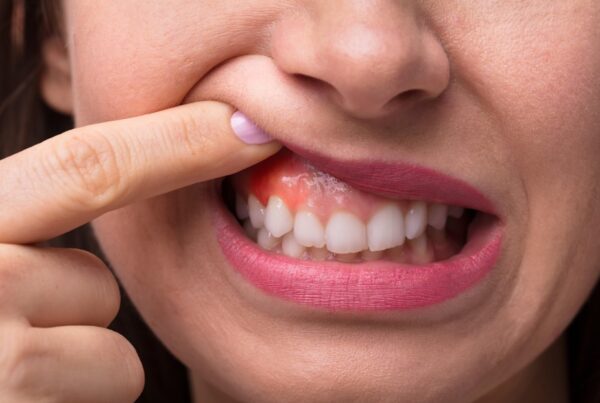
If you feel a sharp twinge when drinking hot coffee or eating ice cream, you have tooth sensitivity (also called dentin hypersensitivity). It’s one of the most common concerns we see at Clínica Dental Smiling: it affects millions of people and, while uncomfortable, it has identifiable causes and a solution.
Why do sensitive teeth hurt?
Tooth enamel is made up of about 97% hydroxyapatite, a mineral that acts as a protective barrier. Beneath it lies the dentin, a layer containing thousands of dentinal tubules — microscopic channels connected directly to the dental pulp, where the nerves are.
Tooth sensitivity occurs when the enamel wears away or the gums recede (gum recession), exposing the dentin. A cold, hot, or acidic stimulus then travels through the tubules and triggers the nerve, causing that sharp twinge. The most common causes we see in the clinic are aggressive brushing, gum recession, bruxism, and regularly eating acidic foods.
Remedies for tooth sensitivity
The good news is that tooth sensitivity can be treated and reversed. Alongside traditional solutions, modern dentistry has introduced cutting-edge products based on hydroxyapatite (especially in its nano form), the same natural component found in teeth.
At-home treatments for tooth sensitivity
- Hydroxyapatite toothpaste: When you brush with specialized brands, the mineral’s microcrystals act like a “biological patch”. They naturally bond to the tooth and physically seal exposed dentinal tubules, blocking the path to the nerve and reducing sensitivity quickly and effectively at its source. They also help remineralize weakened enamel and give a natural whitening shine without being abrasive.
- Hydroxyapatite dental serums: These are intensive, concentrated treatments for daily use. The serum works by depositing liquid nanoparticles directly into the microscopic imperfections in the enamel. You can use it on its own or add a few drops to your regular toothpaste to create a true protective shield against acids and temperature changes.
- Improve your habits: Switch to a soft-bristled brush and use gentle circular motions. Avoid brushing right after eating acidic foods, since the enamel is temporarily more vulnerable at that point.
In-clinic treatment for tooth sensitivity
If toothpaste and serum aren’t enough to improve your sensitivity, at Clínica Dental Smiling we offer complementary treatments. High-concentration fluoride varnishes reinforce the most vulnerable areas of the enamel. Resins and sealants physically cover the area where the gum has receded. And if the root cause is bruxism, we fit a night guard to stop the mechanical wear on the enamel.
Replenishing the tooth’s original mineral content doesn’t just soothe the twinge — it stops sensitivity from progressing before you need more invasive treatment. If your teeth hurt with cold or heat, at Clínica Dental Smiling we help you identify the cause before recommending a product.

Professional registration Nº 28004040
Degree in Medicine and Surgery, Autonomous University of Madrid
Degree in Dentistry, Complutense University of Madrid
Master’s Degree in Aesthetic Dentistry, Complutense University of Madrid
University Specialist in Pediatric Dentistry, San Rafael Hospital, Madrid
University Specialist in Individual and Public Oral Preventive Programs, Complutense University of Madrid
Director of Radiodiagnostic Facilities
Medical Director, Smiling Dental Center
Specialist in Aesthetic Dentistry, Dr. Bruce Crispin, Los Angeles, California
Member of the Spanish Society of Prosthodontics (SEPES)
CPR Course
Advanced English