Bad breath, or halitosis, is more common than most people think. Although it can be an uncomfortable topic to discuss, it affects a large part of the population. Sometimes it’s temporary and can be resolved with improved oral hygiene, but in other cases, it’s persistent and caused by more complex bacterial issues.
Identifying the bacteria responsible for bad breath is key to treating it effectively. Many of these microorganisms settle in hard-to-reach areas, such as the back of the tongue, the gums, or the spaces between the teeth. Understanding how they behave is an important step toward maintaining a healthy mouth and fresh breath.
Which Bacteria Cause Bad Breath?
There isn’t a single culprit — rather, a group of mostly anaerobic bacteria thrive in low-oxygen environments. These bacteria flourish in moist, dark, and sheltered areas of the mouth.
Main bacteria linked to halitosis:
-
Fusobacterium nucleatum
Found in nearly every human mouth, this bacterium contributes to plaque formation. It feeds on proteins and produces volatile sulfur compounds (VSCs), which are responsible for the unpleasant odor. It is also linked to periodontal disease. -
Porphyromonas gingivalis
One of the most aggressive bacteria involved in periodontitis. It produces hydrogen sulfide and other foul-smelling gases. Its presence contributes to bad breath and worsens gum health. -
Prevotella intermedia
Commonly found in people with inflamed or bleeding gums. It also generates odorous compounds and encourages the growth of other harmful bacteria. Controlling it is essential in halting the progression of chronic halitosis. -
Tannerella forsythia
Part of the so-called “red complex” (Socransky), a group of highly pathogenic bacteria associated with severe periodontitis. It produces VSCs and works synergistically with other destructive bacteria like Porphyromonas gingivalis and Treponema denticola. -
Treponema denticola
Spiral-shaped and highly mobile, this bacterium appears in advanced stages of periodontal disease. Its interaction with other bacteria intensifies halitosis, making professional detection and treatment essential.
Periodontal Microbiological Study: A Real Case at Centro Dental Smiling
At our clinic, we performed a periodontal microbiological study on a patient with persistent bad breath using qPCR technology. This quantitative analysis allows us to measure the number of periodontopathogenic bacteria with great precision.
Study Results:
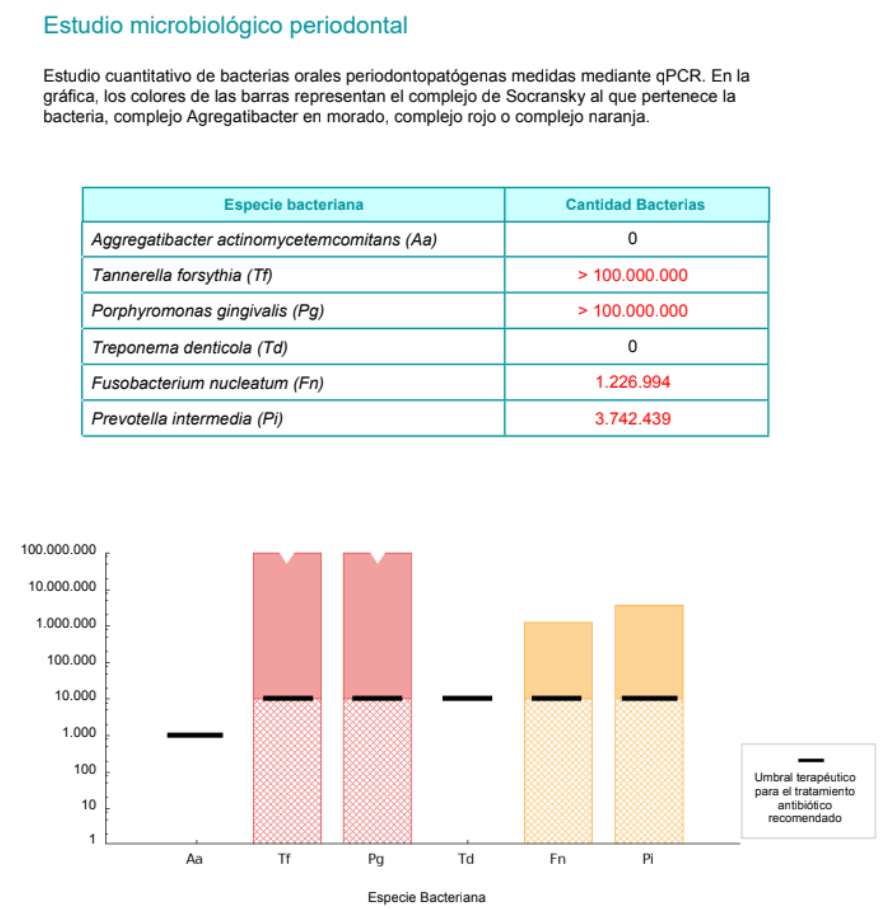
As shown (even after data normalization for better graph readability), a very high bacterial load of Tannerella forsythia and Porphyromonas gingivalis was detected — clearly explaining the patient’s severe halitosis.
Treatment Applied:
A scaling and root planing procedure was performed to eliminate bacterial biofilm, followed by a course of adjunctive antibiotics. The patient experienced significant improvement within just a few days.
Such treatments must always be supervised by a professional after a thorough clinical evaluation.
Antibiotics for Bad Breath: When Are They Recommended?
While antibiotics can help in some cases of bacteria-related halitosis, they’re not always the first line of treatment. They are typically indicated when there is an active infection, such as advanced periodontitis or certain respiratory infections.
Prolonged or unsupervised use can cause side effects like oral thrush or bacterial resistance. There are also topical antibacterial mouthwashes (such as chlorhexidine) that can be used for short periods to avoid tooth staining or taste alteration.
Helicobacter pylori and Bad Breath
Although most halitosis cases have an oral origin, sometimes the problem stems from the digestive system. Helicobacter pylori, a stomach bacterium, can disrupt digestion and contribute to gastroesophageal reflux, allowing foul-smelling compounds to reach the mouth.
Symptoms such as nausea, heartburn, or abdominal pain may suggest its presence. Diagnosis is done through urea breath tests, blood tests, or endoscopy. Treatment typically includes antibiotics combined with proton pump inhibitors.
Other Factors That Promote Bacterial Growth
-
Dry mouth (xerostomia):
Saliva helps wash away bacteria and has antimicrobial properties. A decrease in saliva production favors bad breath. Causes include mouth breathing, certain medications, stress, or conditions like diabetes. -
Plaque and tartar buildup:
When plaque isn’t removed, it hardens into tartar, which harbors anaerobic bacteria that are difficult to eliminate without professional cleaning. -
Coated tongue (lingual coating):
The back of the tongue can accumulate a whitish layer of bacteria, dead cells, and food debris. Using a tongue scraper is key in reducing halitosis.
How to Prevent Bacterial Bad Breath
With consistent habits, halitosis can be prevented:
-
Brush your teeth at least twice a day — using interdental brushes is highly recommended.
-
Use dental floss or interdental brushes.
-
Clean your tongue daily.
-
Stay well-hydrated.
-
Avoid smoking and excessive alcohol consumption.
-
Visit your dentist for regular checkups.
-
Get professional cleanings when necessary.
-
Ask about specific mouthwashes that control bacterial load without damaging the oral flora.
Trust the Professionals
Don’t fight bad breath on your own. A proper diagnosis and personalized treatment plan can make all the difference. At Centro Dental Smiling, we have the technology to perform microbiological studies and a team of experts ready to help you regain your confidence and well-being.
Have questions or persistent symptoms?
Book your appointment and start breathing easy.

Professional registration Nº 28004040
Degree in Medicine and Surgery, Autonomous University of Madrid
Degree in Dentistry, Complutense University of Madrid
Master’s Degree in Aesthetic Dentistry, Complutense University of Madrid
University Specialist in Pediatric Dentistry, San Rafael Hospital, Madrid
University Specialist in Individual and Public Oral Preventive Programs, Complutense University of Madrid
Director of Radiodiagnostic Facilities
Medical Director, Smiling Dental Center
Specialist in Aesthetic Dentistry, Dr. Bruce Crispin, Los Angeles, California
Member of the Spanish Society of Prosthodontics (SEPES)
CPR Course
Advanced English