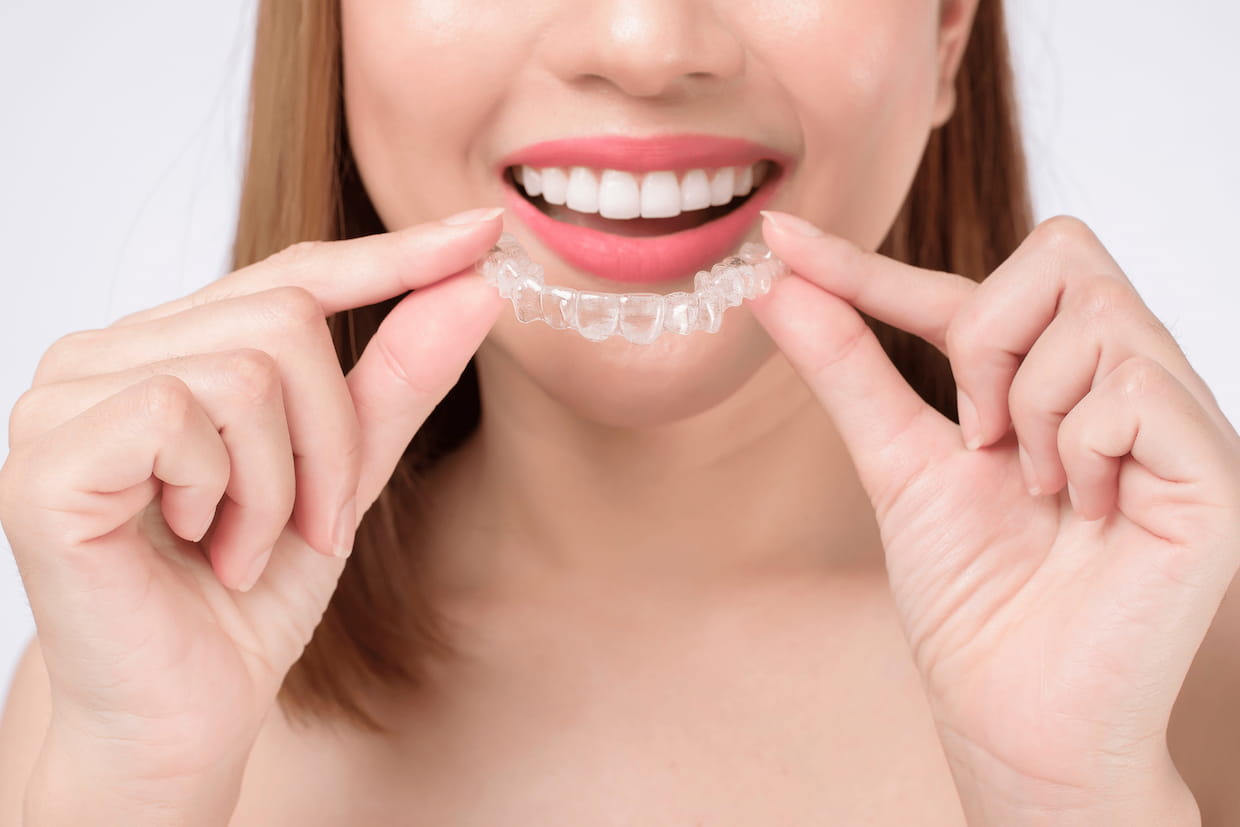
The invisible orthodontics, such as the Invisalign system, has become a popular option for those seeking a discreet and convenient way to straighten their teeth. Below, we address the most common questions and concerns about Invisalign: how it works, who the ideal candidate is, possible discomfort, and much more.
What is Invisalign?
Invisalign is an orthodontic brand that uses clear, removable aligners to correct the position of teeth. It is a discreet alternative to traditional braces since the aligners are nearly invisible, comfortable to wear, and customized for each patient. They allow for gradual teeth alignment while being removable for eating or brushing.
How does Invisalign work?
Invisalign uses a series of clear and removable aligners that gradually adjust the position of the teeth. These customized aligners are created using advanced three-dimensional imaging technology to ensure a precise and tailored treatment plan for each patient.
The aligners apply a controlled force to specific teeth at different stages of the treatment, guiding them toward their ideal position over time. This method, unlike traditional braces, offers a discreet alternative for adults and teenagers.
Invisalign is suitable for a variety of orthodontic issues, such as crowded teeth, spacing, crossbite, and overbite. Additionally, invisible orthodontics allows the aligners to be easily removed for eating and brushing, facilitating oral hygiene.
Who Should Consider Invisible Orthodontics?
Invisalign is an excellent option for people seeking a less visible orthodontic treatment. This system is ideal for mild to moderate cases of malocclusions and misalignments.
However, in more complex situations, such as severe malocclusions, traditional braces may be a better alternative.

Is Invisalign painful to use?
It is normal to experience some initial discomfort or pressure during the first few days of each new aligner. This discomfort is a positive sign that the aligners are repositioning the teeth. As the teeth adjust, this discomfort decreases.
Some patients may notice slight changes in speech during the first few days, but these effects are temporary and naturally resolve with regular use.
Is Invisalign Really Invisible?
One of the main advantages of Invisalign is that it is practically invisible. The clear aligners blend with your teeth, making the treatment unnoticeable in social and professional settings.
However, sometimes attachments —small composite bumps— are used to help the aligners perform micromovements to guide the teeth into their ideal position.
How Long Does Invisalign Treatment Last?
The duration of the treatment varies for each case, but it generally ranges from several months to a few years. The time depends on factors such as the degree of misalignment and the frequency of aligner use. Patients are advised to wear the aligners for 20 to 22 hours a day to achieve optimal results.
Can I Eat and Drink While Wearing the Aligners?
One of the advantages of Invisalign is that it allows patients to remove the aligners to eat and drink. It is essential to remove the aligners before consuming anything other than water and to brush your teeth before putting them back on. This prevents stains and cavities and ensures that the aligners remain clear and free of residue.
How should I care for my Invisalign aligners?
To keep the aligners clean, it is recommended to rinse and brush them with a soft toothbrush. Additionally, the aligners should be stored in their case when not in use to avoid loss or damage. It is advisable to attend regular dental check-ups to monitor progress and ensure continued oral health during treatment.

What types of orthodontic problems can Invisalign treat?
Invisalign can help correct various issues, including:
- Dental crowding
- Dental spacing
- Crossbite
- Overbite
- Open bite
Each case is evaluated individually, and your orthodontist will design a personalized treatment plan to address your specific needs.
This FAQ guide about Invisalign provides a comprehensive overview of how the treatment works, its duration, the necessary care, and who the ideal candidates are. If you still have questions, contact your dental center in Madrid for more information.

Professional registration Nº 28004040
Degree in Medicine and Surgery, Autonomous University of Madrid
Degree in Dentistry, Complutense University of Madrid
Master’s Degree in Aesthetic Dentistry, Complutense University of Madrid
University Specialist in Pediatric Dentistry, San Rafael Hospital, Madrid
University Specialist in Individual and Public Oral Preventive Programs, Complutense University of Madrid
Director of Radiodiagnostic Facilities
Medical Director, Smiling Dental Center
Specialist in Aesthetic Dentistry, Dr. Bruce Crispin, Los Angeles, California
Member of the Spanish Society of Prosthodontics (SEPES)
CPR Course
Advanced English